Google honours statistician Prasanta Chandra Mahalanobis on 125th birth anniversary
PCM is credited with introducing the world to “Mahalanobis distance”, a measurement used in population studies, which is depicted in the doodle by UK-based illustrator Nishant Choksi
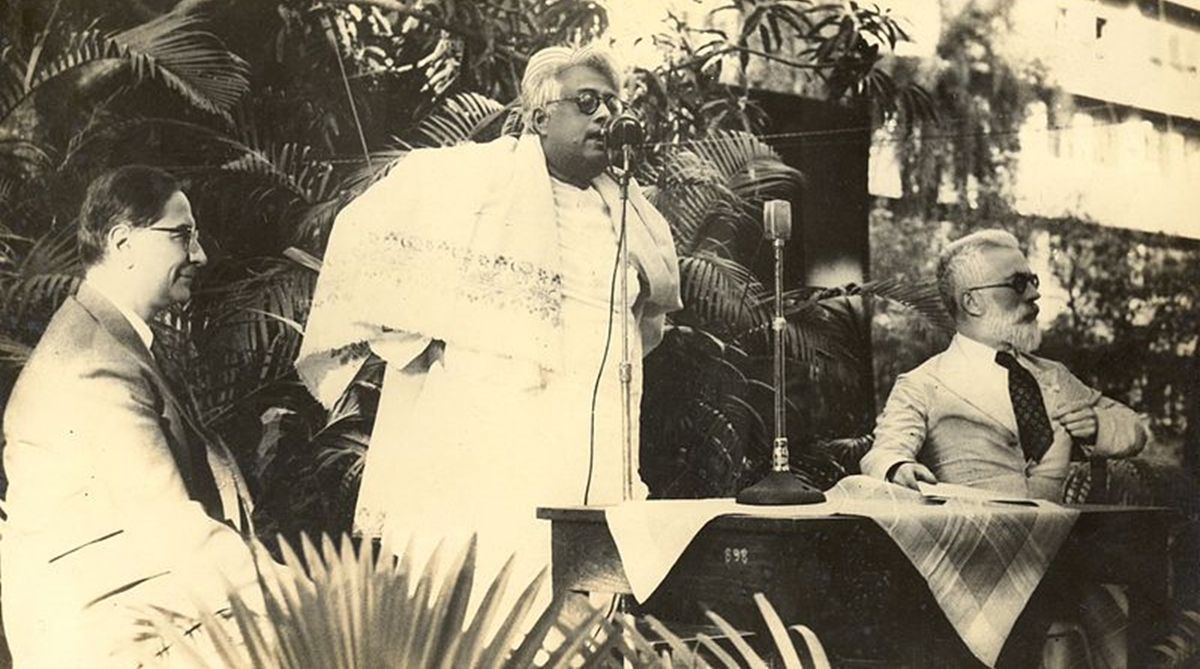
Prasanta Chandra Mahalanobis (Left) with Satyendra Nath Bose (Speaking) and Ronald Aylmer Fisher (Right). (Photo: Wikimedia Commons)
It is the 125th birth anniversary of legendary statistician Prasanta Chandra Mahalanobis on 29 June 2018, and today’s Google Doodle is dedicated to him.
Born on 29 June, 1883, Prasanta Chandra Mahalanobis, popularly known as PCM, is regarded for his pioneering work in establishing study of statistics in India. Largely self-taught, statistician PCM was one of the founders of the Indian Statistical Institute that came into being in 1931, when he taught at the Presidency College in Kolkata.
Advertisement
He went on to strengthen the statistical system of India by launching the National Sample Survey Office (NSSO) and the Central Statistical Organisation (CSO), and was also a member of the first Planning Commission of India.
Advertisement
PCM is credited with introducing the world to “Mahalanobis distance”, a measurement used in population studies, which is depicted in the doodle by UK-based illustrator Nishant Choksi.
Mahalanobis, who was a scientist too, had interest in diverse scientific disciplines. Working in the field of population studies, he combined anthropology, economics and physics to develop better approaches.
Congress president Mallikarjun Kharge and senior party leader Priyanka Gandhi Vadra on Saturday paid glowing tributes to Nobel laureate Rabindranath Tagore on the occasion of his birth anniversary, celebrating his enduring legacy as a poet, philosopher, reformer and champion of human dignity whose ideas continue to resonate across generations.
Prime Minister Narendra Modi visited Kolkata’s Brigade Parade Ground where he joined a tribute ceremony marking Rabindranath Tagore’s 165th birth anniversary.
A reflective journey through Santiniketan and the Kopai River, exploring Rabindranath Tagore’s deep connection with the land, its people, and its timeless serenity.